
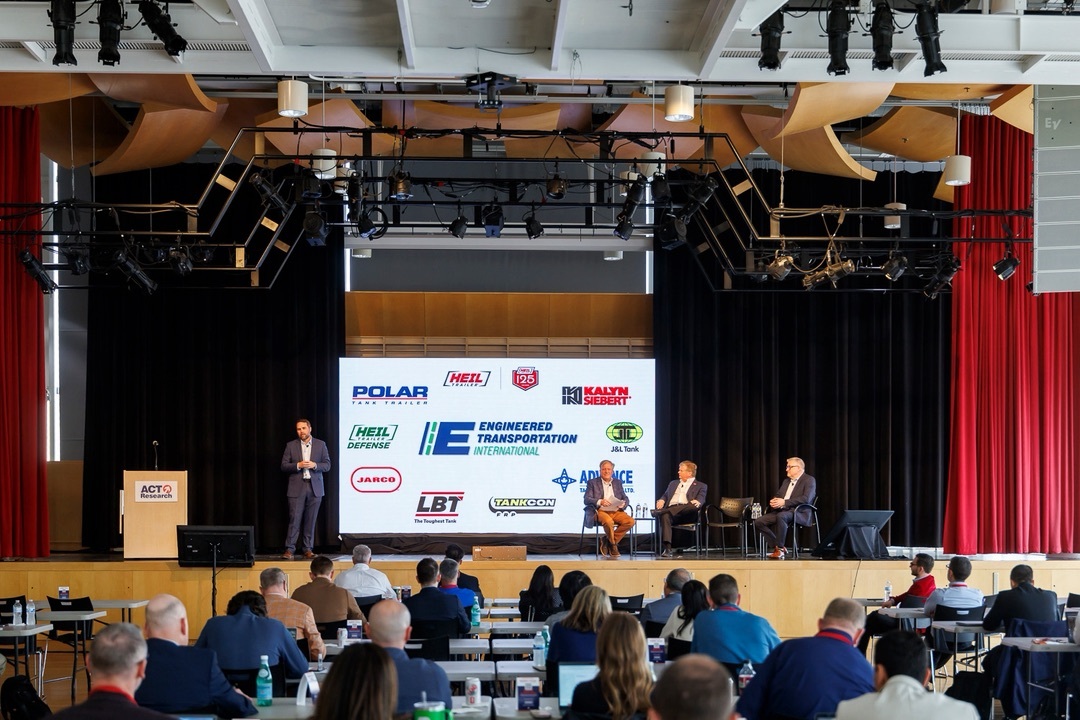
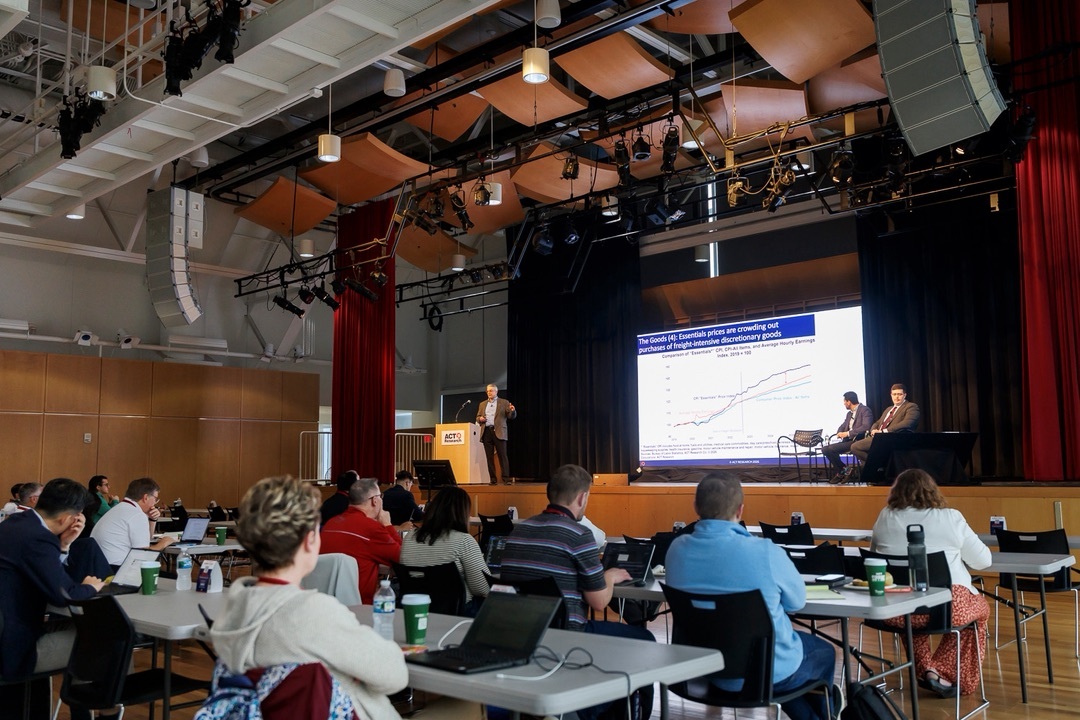
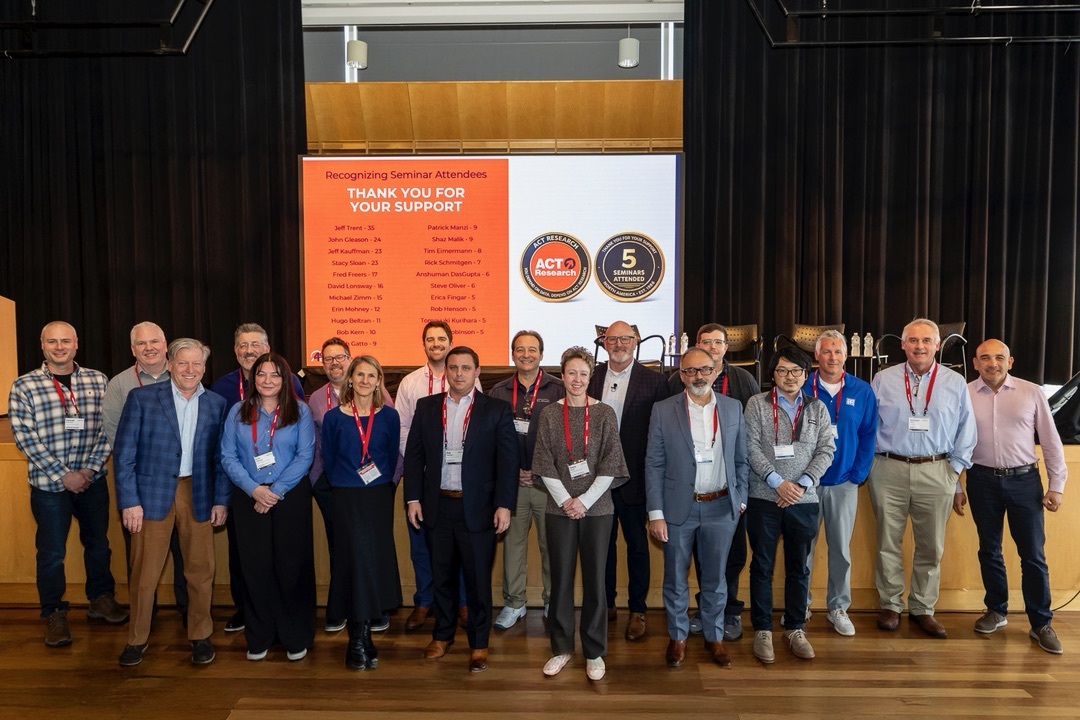
ACT Research recently hosted its 74th Market Vitals: The Current & Future Health of the Industry Seminar on February 18–19 in Columbus, IN, marking a special milestone, 40 years of delivering commercial vehicle and freight market intelligence to the industry.
Bringing together professionals from OEMs, suppliers, fleets, dealers, and financial institutions, the two-day event focused on actionable insights to support planning and budgeting decisions for 2026 and beyond. As discussions unfolded, one theme consistently emerged: cautious optimism as the industry transitions toward its next cycle.

A 40-Year Legacy of Industry Intelligence
Since 1986, ACT Research has provided data-driven analysis and forecasting services to the commercial vehicle marketplace. Seminar 74 not only delivered the team’s updated forecasts for 2026–2029 but also celebrated four decades of helping industry leaders navigate change with clarity and confidence.
The event featured presentations from ACT’s analyst team alongside a diverse lineup of guest speakers, including:
- Ryan Rockafellow, CEO, EnTrans International
- Chris Hammond, Executive VP of Sales, Great Dane
- Dave Sowers, Head of Ram Professional Operations, Stellantis
- Mike Jacques, VP, Inland Kenworth
- Steve Oliver, VP of Sales & Marketing, Taylor & Martin
- Jacob Brazier, Senior VP, Sales, TEL
- Mazen Danaf, Lead Economist, Uber Freight
- Patrick Manzi, Chief Economist, NADA
- Matthew Leffler, Lawyer, Armchair Attorney, LLC
- Thom Albrecht, Chief Revenue Officer, Reliance Partners
- Anthony Johnson, President, Marvin Johnson & Associates
- Todd Coppaken, President, Image Truck Partner
- Mat Leo, Director, Research & Market Intelligence, C.H. Robinson
Their perspectives, combined with ACT’s proprietary forecasts, created a comprehensive view of both risks and opportunities ahead.
Economic Outlook: Growth with Concentration
Day 2’s economic panel featured David Teolis (ACT Research), Mazen Danaf (Uber Freight), and Patrick Manzi (NADA).
According to Teolis, ACT’s baseline scenario anticipates:
- Strong growth in the first half of 2026, concentrated in AI investments and high-income consumers
- Low employment growth
- Inflation slowing toward 2%
- The Federal Reserve cutting rates by 50 basis points
Panelists also explored manufacturing expansion, tariffs, regulatory developments such as the English language proficiency and nondomiciled CDL rules, peak season tightness, and weather disruptions, including Winter Storm Fern/Gianna.
The takeaway: macroeconomic improvement is likely, but uneven, requiring disciplined planning and flexibility.
Freight: A Cycle on the Verge of Turning
Tim Denoyer shared that the for-hire freight cycle appears poised for a shift.
“The for-hire freight cycle is getting ready to turn. Capacity contraction should drive demand. Tighter capacity plus the longest downturn this century equals a shift from late cycle to early cycle,” he noted.
After an extended and painful downturn, tightening capacity may finally support improved fundamentals. While risks remain, the market is showing early-cycle characteristics, an important inflection point for carriers, brokers, and shippers alike.
?si=DZ38UL4_b8kSQog4
Class 8: Profitability Still Pressured, But Momentum Building
Carter Vieth addressed the Class 8 market, noting that despite recent spot rate improvement, carrier profitability remains under pressure.
Fleets continue to face capital expenditure constraints but are expected to see improvement in 2026. The Class 8 forecast has increased, supported by:
- A better-than-expected economy heading into 2026
- A surge in spot rates
- Greater clarity around EPA’27
- Strong December order activity
The takeaway: conditions are stabilizing, and planning horizons are beginning to extend again.
Trailers: Hesitation and Strategic Capex Balancing
Jennifer McNealy highlighted continued caution in the trailer market.
“Trailer customers have skipped buying cycles but remain hesitant and concerned about pricing. Fleets are balancing capex between power and trailing equipment ahead of EPA’27. OEMs are navigating subpar demand at the start of 2026 with continued uncertainty while looking for opportunities,” she explained.
For many fleets, capital allocation decisions are strategic and selective, reflecting both regulatory timelines and profitability constraints.
Medium Duty (Classes 5-7): Emerging from Decline
Steve Tam shared that the medium-duty market is positioned to emerge from its downturn in 2026.
After gradually slowing in 2025 amid tariffs and weaker consumer sentiment, recent order improvement suggests:
- Continued consumer spending
- Cautious optimism about the broader economy
- Regulation-driven dealer stocking
While not without risk, the segment is beginning to show signs of stabilization and recovery.
Looking Ahead
Seminar 74 reinforced that while 2025 tested the industry’s resilience, 2026 may mark the beginning of a new phase. Freight fundamentals are improving, order activity is strengthening in key segments, and regulatory clarity is helping fleets refine long-term strategies.
ACT Research will continue to monitor these developments through its N.A. CV OUTLOOK and Freight Forecast services, delivering data-driven guidance to support informed decision-making across the commercial vehicle ecosystem.
Register now and mark your calendars: the next Market Vitals Seminar will be held August 19–20, 2026
As the industry transitions from prolonged downturn to early-cycle recovery, one message from Seminar 74 was clear: prepare strategically, remain flexible, and plan for what’s next.

